News
Designing for 2046
Feb 26, 2026
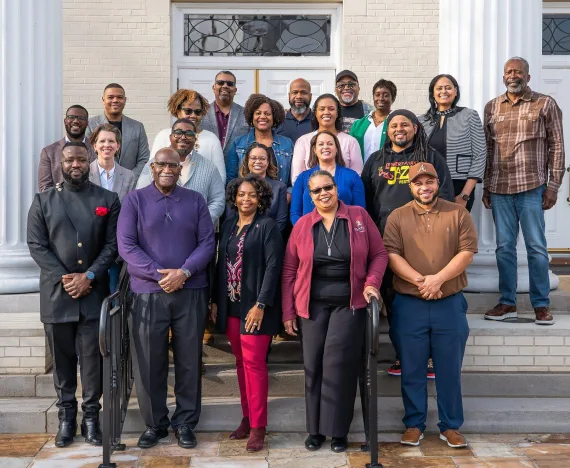
Leaders from across the United Methodist Church recently gathered to reflect on the future shaped by the Black experience in the church — not simply the future of an institution, but the future of a witness and a spiritual inheritance.
The conversation began with honesty. Decades of decline in many Black congregations. Hundreds of closures. Clergy fatigue layered with generational trauma. Structural inequities shaping recruitment, retention, and sustainability. These realities were named plainly — not to rehearse loss, but to ground the work in truth.
But the center of the gathering was not decline.
It was formation.
What kind of spiritual life will the next generation need? What experiences of God, community, justice, and belonging will shape their faith twenty years from now? And how must leaders be formed today to serve that future?
Again and again, the same threads surfaced. Reality must be faced without defensiveness. Relationships must move from isolation to ecosystem. Resources — financial, relational, institutional, spiritual — must be aligned for long-term flourishing. And recruitment cannot be accidental; emerging leaders must be seen, trusted, and formed with intention.
The energy in the room centered less on preserving buildings and more on cultivating people — courageous leadership, stronger lay voice, deeper community presence. This is long-haul work, measured in decades rather than quarters.
At its heart, the gathering was spiritual. It asked how the Spirit is shaping the Black experience in the church for the years ahead — and how the Body of Christ can be formed to meet what is coming with faithfulness and courage.
That question extends well beyond one context.
What kind of spiritual future are you preparing for?
And how are you and your congregation being formed — right now — to serve it?